International Circularity Competition Debuts Bold Ideas Solving Challenges from Hunger to Pollution and More -- Created by Students Around the World
PR Newswire
GRAND RAPIDS, Mich., May 4, 2026
Finalists for Wege Prize 2026 devise ways to solve food insecurity and pollution challenges -- Innovations on global stage from five countries and 14 universities -- Public presentations and awards event May 15 in Michigan and live on WegePrize.org
GRAND RAPIDS, Mich., May 4, 2026 /PRNewswire-PRWeb/ -- Wege Prize, the annual competition that ignites game-changing solutions for the future by inspiring university students around the world to redesign the way economies work, has announced their five finalists for this year's edition. In a first, all of the teams vying for global honors this year hail from Africa, a reflection of the continent's booming movement to embrace the value of waste and reimagine production/consumption dynamics through the regenerative lens of the circular economy.
"It also reflects the passion, commitment, and collective spirit of young African entrepreneurs who have cultivated a mindset of cooperative disruption and changemaking," says Gayle DeBruyn, leader of Wege Prize and an award-winning professor at Ferris State University's Kendall College of Art and Design (KCAD), which organizes the competition with support from the Wege Foundation. In May, the five finalist teams will present real-world solutions developed over the course of a nine-month process with expert input from Wege Prize's judges. Finalist projects include an emissions control and recapture system for incinerators, a sustainable edible insect rearing and processing system addressing infant malnutrition, and a use of banana crop waste to make affordable and biodegradable sanitary pads. Another team is creating flours from local farming products including whey, which is typically discarded and can end up contaminating water sources, while the fifth finalist turns waste streams from cocoa production into soil-enhancing biochar, a type of charcoal. (More details below.)
With big ideas for a world reeling from hunger, climate impacts, food waste and inequity, these five student teams step forward into the final phase of the competition to share their innovative solutions publicly for the first time at the 2026 Wege Prize Awards. The free public event takes place Friday, May 15, streaming live at wegeprize.org and live, in person, starting at 10:00am EDT at Ferris State University's KCAD in Grand Rapids, Michigan.
ABOUT THE FINALISTS
After months of research, learning, and experimentation, these five groups of collaborative student problem solvers have emerged from an initial field of 87 teams to be named finalists in Wege Prize 2026. The annual competition ignites game-changing solutions for the future by inspiring college/university students around the world to collaborate across institutional, disciplinary, and cultural boundaries to redesign the way economies work.
- Agri Nova is addressing seasonal limitations of harvesting edible grasshoppers— an increasingly vital and culturally significant protein source, especially in parts of the world with food insecurity—by developing modular, low-impact farming units that adapt to local conditions and enable year-round production.
- Ecoscrubber is creating a hybrid emission control and carbon-capture system designed to eliminate toxic pollutants and greenhouse gases from incinerators while transforming captured residues into valuable construction materials.
- Egret Pads is turning banana crop waste into affordable, biodegradable sanitary pads for women in Rwanda's low-resource communities, creating dignified access to menstrual health through a circular system that empowers women, supports farmers, and returns used pads back to the soil as fertilizer.
- Nutri-Más is blending whey—typically discarded by dairy producers and a cause of water contamination—with locally grown sorghum, maize, and groundnuts to create a nutrient-dense composite flour for children facing malnutrition in Bor, South Sudan.
- UniThread EcoHusk is reimagining discarded cocoa husks—which degrade soil and harbor pests and disease when left to rot—as raw materials for both soil-enhancing biochar (a type of charcoal) and activated charcoal-based purification kits that can keep 95% of textile dye pollution out of water and wastewater streams.
Adds DeBruyn, "These teams from Africa are showing the world the power of true interdisciplinary collaboration and design thinking to address the world's wicked problems, with a particular opportunity to become part of the fast-growing circular economy now exploding on their continent."
DeBruyn points to recent reporting on Africa's waste management market, valued at $21.7 billion in 2025 and growing about 5% annually, "where startups are turning plastics, organics, and e-waste into value streams that generate jobs, reduce emissions, and create circular supply chains strengthening local economies." These circular economy enterprises are using "waste-to-value models" that create revenue streams from what were once simply onerous costs for disposal — while adding jobs and, as the Wege Prize teams prove, solving pollution, scarcity and hunger issues.
WANT TO BUILD A BETTER FUTURE?
The next Wege Prize application period begins later this year, in August 2026. The organizers are expecting a competitive field, so applicants are encouraged to start organizing their teams now. Information for 2027 will be available later this year at wegeprize.org/apply.
As part of Wege Prize, the participating student teams turn their ideas, starting as informal proposals, into robust and feasible solutions. With the input of expert judges, the competing teams employ research, market analysis, and real-world prototyping and testing to advance their plans.
Established in 2013, Wege Prize encourages student teams to solve complex, layered problems with diverse perspectives / knowledge fields and an interdisciplinary, collaborative approach. The com-petition's rules and design brief call for developing new, tangible solutions to producing and consuming essential goods — in sustainable ways that can be applied and used after the competition ends.
ABOUT THE LIVE EVENT
The Wege Prize Awards is once again a free, in-person program held at KCAD in Grand Rapids, Mich., with an accompanying free livestream that will be available globally at wegerize.org starting on Friday, May 15 at 10:00am ET.
Watch the students defend their ideas and respond to final judge feedback along with a worldwide audience. To attend 2026 Wege Prize Awards: Game-Changing Solutions to Wicked Problems, or to view the livestream, please find event details and registration at kcad.formstack.com/forms/2026_wege_prize_awards_rsvp
Detailed press background on the five finalist teams follows below.
More information about the Wege Prize finalists for 2026 can be found here. Visit wegeprize.org/2026-teams for more details. Imagery available by request and at https://we.tl/t-rL6RRZGNm2fuXx9s for press use only.
Finalist Teams
For Wege Prize 2026
Agri Nova is developing HoppGold, a sustainable grasshopper rearing and oil production operation that delivers a critical response to the escalating malnutrition crisis affecting vulnerable infants. By leveraging an underutilized, nearly endangered grasshopper species to create nutrient-rich oil high in omega-3 and omega-6 fatty acids, the team is working to provide widespread and affordable access to essential nutrients that are scarce in most diets.
- Team members from three universities in Rwanda
EcoScrubber is developing a hybrid emission control
and carbon-capture system designed to eliminate toxic pollutants and greenhouse gases from incinerators while transforming captured residues into valuable construction material. It offers healthcare facilities, industries, and municipalities an affordable, locally engineered pathway to cleaner air and a circular, sustainable future by inte- grating dry and wet scrubbing chambers with circular material recovery.
- Team members from two universities in Kenya
Egret Pads is addressing the intersecting challenges of menstrual health inequity and unmanaged agricultural waste by transforming locally abundant banana pseudostems into affordable, biodegradable sanitary pads for girls and women in low-resource communities, creating dignified menstrual access while advancing a circular system that empowers women, supports farmers, and returns used materials back to the soil as fertilizer.
- Team members from five institutions of higher education in Rwanda
Nutri-Más (image at left) is blending whey — which is typically discarded by diary producers and contributes to water contamination — with locally grown sorghum, maize, and groundnuts to create a nutrient-dense composite flour that improves protein and micronutrient intake for children facing malnutrition in Bor, South Sudan. By strengthening the nutritional value of a familiar staple food while productively using agricultural and dairy by-products, Nutri-Más addresses the country's 36% child stunting rate and reduces environmental pollution from unmanaged dairy waste.
- Team members from universities in Kenya and Costa Rica
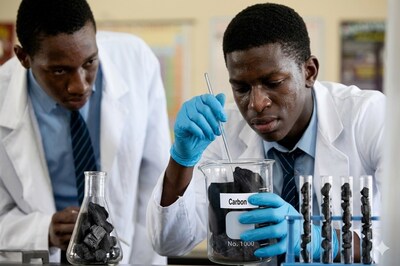
Unithread Ecohusk (image above right) is addressing two intersecting waste streams that shape daily life across cocoa-growing regions of West Africa: husks that accumulate after harvest and are often burned or left unmanaged, and dye wastewater that flows untreated from textile pits into nearby rivers, degrading air and water quality. The team is proposing a refill-based circular system that converts discarded cocoa husks into activated charcoal for dye filtration and returns stabilized biochar to farms—embedding circular recovery into existing local infrastructure while reducing emissions, cleaning waterways, and restoring soil health.
- Team members from universities in Nigeria and Malawi
Media Contact
Kyle Austin, Wege Prize / Ferris State's KCAD, 1 616-451-2787, KyleAustin@ferris.edu, www.Ferris.edu
Chris Sullivan, C.C. Sullivan, 1 914-462-2096, chris@ccsullivan.com, www.ccsullivan.com
 View original content to download multimedia:https://www.prweb.com/releases/international-circularity-competition-debuts-bold-ideas-solving-challenges-from-hunger-to-pollution-and-more--created-by-students-around-the-world-302760007.html
SOURCE Wege Prize / Ferris State's KCAD


